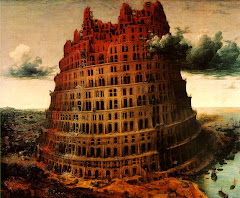
Nothing against New Braska, which I think is one of the fly-over states out there beyond West Consin, but the Big Ten Conference is being way too conservative in its bold restructuring plan. I like the fact that the Cornhuskers are joining the oldest, most stable, classiest, old-school college league in the country. I liked it when they added Penn State, which fits like a glove, with their plain blue uniforms and flagship state university status. Let's take a moment to feel just a little bit superior.
With the rest of the NCAA in disarray, this is an opportune time to move decisively to outflank the other, lesser conferences. While the PAC 10-12 adds teams a thousand miles from the Pacific, the ACC adds teams a thousand miles from the Atlantic, and educators bemoan the geographic ignorance of kids nowadays, let's consolidate our midwestern base around the economic and cultural hub that is Chicago.
To wit: Don't just add Nebraska from the old Big 12 (formerly Big 8), add Kansas and Missouri, solidifying the heartland fan base and absorbing the St. Louis-Kansas City TV markets. While we're at it, consider Oklahoma and - gasp - Texas. NOT Kansas State, Oklahoma State, Iowa State, Texas Tech, etc. This is an exclusive Old Boys (and Old Girls) Club called the Big 10, and while we believe in the land-grant college ag-and-tech concept in the abstract, we're not in that business - except when it's Ohio State and Michigan State. You gotta draw the line somewhere.
What do KS, OK, MO, and TX bring to the table? Huge TV audiences, of course, historic football traditions, excellence in many other sports (Kansas basketball), academic respectability, and a warm-water port for international commerce. It might be argued that inviting Oklahoma to join the Big 10 is like inviting Turkey to join the European Union. The suits in Ann Arbor and Evanston (Paris and Bonn) will gag on their white wine at first, then they'll get over it when they see the national rankings, the TV revenue, and the bowl revenue. I picture the folks in Austin, Norman, Lawrence, and Columbia, like the folks in Lincoln, will walk a little taller.
Divisional alignment of the 16 teams in the Big 10 - I'm keeping the name because you don't mess with the brand - should be along geographical lines, simply because people relate to neighborly rivalries. You wouldn't want to separate UM and MSU, for gosh sakes, or IU and PU. The obvious divisions are:
EAST
Penn State
Ohio State
Michigan
Michigan State
Indiana
Purdue
Northwestern
Illinois
WEST
Wisconsin
Minnesota
Iowa
Missouri
Nebraska
Kansas
Oklahoma
Texas
If this alignment creates a competitive imbalance, so be it. Power will shift before you know it, and before long the Michigans and Penn States will return with a vengeance to challenge the Sooners and Longhorns. And what a conference playoff that would be!
Wednesday, September 21, 2011


Sunday, September 04, 2011
On learning and labor
How best to make use of a weekend to recover from a workweek and restore body and soul to working condition? Is that what Labor Day is for? Put another way, what can I learn from the challenges of the past week(s) that will make me whole again and give me tools and perspective to function more effectively? Labor Day as restoration, celebration, and education.
The mind and body need to switch gears at the end of the day and move into another activity with another set of conditions and another purpose. Examples: going from spreadsheets and schedules to trees and flowers; from logical analysis and rational planning to romantic musing and playful pipedreams; from the keyboard and the screen to the bicycle and the ball; from the procedures manual to the novel.
Being able to switch gears at all is a survival skill that for some people seems to develop naturally and intuitively, while others have to work at it, and some would rather not be bothered. Some acquire an adaptive facility early and continue to refine it with age. Others struggle with it or have no idea. Is it an exaggeration to say that addiction and other self-destructive behaviors are symptoms of the inability to make the shift from left-brain activity to right-brain activity and back? Is it an oversimplification to suggest that bad decisions are usually the result of relying excessively on one side of the brain and neglecting the other?
Work hard, play hard, take a break. How many alcoholics, overeaters, stoners, spouse abusers, schoolyard bullies, deadbeat dads, and compulsive liars just want to go home and relax but haven't learned how?
D.H. Lawrence said the poverty of coal miners in northern England consisted partly of a lack of beauty in the slum housing and ravaged landscape of mining towns. What had earlier been a region of peasant farms and villages was turned into an industrial war zone at great profit to others. Most of those people were poor to begin with, but the material and spiritual poverty they endured was a different kind of suffering. So-called alienated labor works only for the dollar (pound, franc, mark, whatever) without regard for the work except as a means. It's a mean existence, and it can make people mean because what they do has no meaning.
It is well known how the change from farming and herding to mining and manufacturing affected the British culture and economy. Workers were moved off productive land and into mines and factories, populations were displaced from the countryside to cities, and technology powered a faster, bigger productive system. Wealth was generated. It is just as clear that "social problems" like crime, violence, and public health issues arise in part from the same concentration on extracting resources from the ground, burning fossil fuels, and building bigger weapons of mass destruction.
Lots of nineteenth-century rich people got richer and did some stupid things; many more nineteenth-century poor people got poorer and dumber and did some stupid things. You don't have to be a Luddite to see that some kind of counter-measures are needed to mitigate the negative effects of technology, and I'm not talking about TV, fast food, and cheap beer. Not many people want to live off the grid. Many are convinced that it's the workers' own fault if they don't have the knowledge, skills, and good taste to make rational consumer decisions and act like people with class.
Before I completely veer off-topic (too late), let me say that I don't see any solutions in the current political standoff between Democrats and Republicans, union and management, or lefties and righties, while realizing that adversarial gamesmanship will continue to play out people's personal dramas. What I'm looking for is a way to adjust my own habits in the micro-practice of making ends meet every month, while adjusting my view of the macro-practices of the company I work for, the state I live in, and the global economy that is either falling apart at the seams or morphing into something new and strange and dangerous. Hello oligarchy!
I have no doubt that the strains pulling on the social fabric are the shared responsibility of the workers and managers and stockholders and brokers and buyers, all of whose irresponsible excesses are doing more harm than good. The reforms and adjustments to come are bound to be difficult, with a lot of options to determine the means and the consequences - intended and unintended - of the choices to be made. I think the micro-adjustments I choose to make and the macro-adjustments made by S&P, Goldman Sachs, the Eurozone, Saudi Arabia and other major players will make a difference in how things shake down in the 15 months before it all falls down on 12/12/12.
If enough of us learn from our labor how to shift from linear/logical/positivist/objectivist thinking to fuzzy/holistic/aesthetic/pluralistic thinking, it might affect the outcome of the choices we make. And we have to remember to shift back when it's time to go to work the next day.
The mind and body need to switch gears at the end of the day and move into another activity with another set of conditions and another purpose. Examples: going from spreadsheets and schedules to trees and flowers; from logical analysis and rational planning to romantic musing and playful pipedreams; from the keyboard and the screen to the bicycle and the ball; from the procedures manual to the novel.
Being able to switch gears at all is a survival skill that for some people seems to develop naturally and intuitively, while others have to work at it, and some would rather not be bothered. Some acquire an adaptive facility early and continue to refine it with age. Others struggle with it or have no idea. Is it an exaggeration to say that addiction and other self-destructive behaviors are symptoms of the inability to make the shift from left-brain activity to right-brain activity and back? Is it an oversimplification to suggest that bad decisions are usually the result of relying excessively on one side of the brain and neglecting the other?
Work hard, play hard, take a break. How many alcoholics, overeaters, stoners, spouse abusers, schoolyard bullies, deadbeat dads, and compulsive liars just want to go home and relax but haven't learned how?
D.H. Lawrence said the poverty of coal miners in northern England consisted partly of a lack of beauty in the slum housing and ravaged landscape of mining towns. What had earlier been a region of peasant farms and villages was turned into an industrial war zone at great profit to others. Most of those people were poor to begin with, but the material and spiritual poverty they endured was a different kind of suffering. So-called alienated labor works only for the dollar (pound, franc, mark, whatever) without regard for the work except as a means. It's a mean existence, and it can make people mean because what they do has no meaning.
It is well known how the change from farming and herding to mining and manufacturing affected the British culture and economy. Workers were moved off productive land and into mines and factories, populations were displaced from the countryside to cities, and technology powered a faster, bigger productive system. Wealth was generated. It is just as clear that "social problems" like crime, violence, and public health issues arise in part from the same concentration on extracting resources from the ground, burning fossil fuels, and building bigger weapons of mass destruction.
Lots of nineteenth-century rich people got richer and did some stupid things; many more nineteenth-century poor people got poorer and dumber and did some stupid things. You don't have to be a Luddite to see that some kind of counter-measures are needed to mitigate the negative effects of technology, and I'm not talking about TV, fast food, and cheap beer. Not many people want to live off the grid. Many are convinced that it's the workers' own fault if they don't have the knowledge, skills, and good taste to make rational consumer decisions and act like people with class.
Before I completely veer off-topic (too late), let me say that I don't see any solutions in the current political standoff between Democrats and Republicans, union and management, or lefties and righties, while realizing that adversarial gamesmanship will continue to play out people's personal dramas. What I'm looking for is a way to adjust my own habits in the micro-practice of making ends meet every month, while adjusting my view of the macro-practices of the company I work for, the state I live in, and the global economy that is either falling apart at the seams or morphing into something new and strange and dangerous. Hello oligarchy!
I have no doubt that the strains pulling on the social fabric are the shared responsibility of the workers and managers and stockholders and brokers and buyers, all of whose irresponsible excesses are doing more harm than good. The reforms and adjustments to come are bound to be difficult, with a lot of options to determine the means and the consequences - intended and unintended - of the choices to be made. I think the micro-adjustments I choose to make and the macro-adjustments made by S&P, Goldman Sachs, the Eurozone, Saudi Arabia and other major players will make a difference in how things shake down in the 15 months before it all falls down on 12/12/12.
If enough of us learn from our labor how to shift from linear/logical/positivist/objectivist thinking to fuzzy/holistic/aesthetic/pluralistic thinking, it might affect the outcome of the choices we make. And we have to remember to shift back when it's time to go to work the next day.
Sven's Guide to Effective Parenting
1. Clearly distinguish between personal relationships and professional relationships.
2. Sparingly and cautiously disclose information, experience, and advice to offspring about the former, trusting that they will pay close attention to your example and the wisdom harshly earned and do the opposite.
3. Freely and candidly disclose information, experience, and advice to offspring about the latter, trusting that they will have absolutely no interest in your boring, petty, anachronistic issues and do the opposite.
2. Sparingly and cautiously disclose information, experience, and advice to offspring about the former, trusting that they will pay close attention to your example and the wisdom harshly earned and do the opposite.
3. Freely and candidly disclose information, experience, and advice to offspring about the latter, trusting that they will have absolutely no interest in your boring, petty, anachronistic issues and do the opposite.
Thursday, August 18, 2011
Untitled and Uninspired Up North
The first day was a morning of packing up and getting ready to go, which is always stressful in a grumpy sort of way. With a minimum of frustration we were on the road at 1:15. I remember because both the clock and the odometer read 115, and a responsible traveler has to know these things.

The plan was to get to Detroit around five-ish, and we rolled up through the Downriver suburbs listening to a fitting soundtrack, "The Best of Cream." Then in our excitement we missed an exit to I-75 north and played cultural anthropologist on downtown streets, watching Tiger fans walk to Comerica Park on a beautiful Saturday afternoon. I was never an Eastside guy, so winding up through the city was not a trip down memory lane as much as a reminder that the city is alive and well despite widespread belief to the contrary.
The Spartan Inn motel in downtown Rochester was not as Spartan as I expected but just Spartan enough to be cheap, clean, and very adequate. Gven and I had ample time to get dressed and go to our nephew Todd's wedding reception at the Fieldstone Winery in downtown Rochester. My sister Anna Banana Golly Gosh and brother in law Fred Gosh were in fine form, enjoying the celebration and very at home among both sides of the family - the Gollys and the Goshes - which mixed politely before settling in at separate tables.
I love how revealing of character these events are, especially when the person you're talking to is guarded, standoffish, distant, or defensive while ranting about everything and everybody else, telling you all you need to know about the subject without putting their cards on the table. Maggie and Ted Gosh-Carpenter, on the other hand, looked me in the eye and made real statements about their real lives, and I appreciate that.
Out of towners gathered at the Gosh-Golly home for a delightful after-party and an unnecessary additional glass of wine, and the cool evening lent itself to more intimate conversation, first in the family room and then the the deck: Android vs. Mac, tablet vs. phone, McGraw vs. Pearson, and the future of online educational content vs. print.
We reconvened for breakfast on the deck, a fabulous array of coffee cakes, scones, souffles, and fresh fruit served by Anna Banana and her sister in law Judy of Ludington and Florida. A relaxed morning gave me an opportunity to get to know Fred's Uncle Ralph and Judy's husband Heinz as they traded sailing stories. My brother Petro Golly wore black jeans and a black T-shirt in preparation for his flight to Dusseldorf for a metals trade show later in the day. It must be a German thing.
Gven and I got back in our new black Escape and headed north to begin part two of our Michigan weekend. Tent, check. Cooler, check. Bikes, check. Cots, check. Firewood, check. I guess we're ready for the north woods. We established our base camp under the same huge pine tree as last year and cooked brots for supper.
The weather was a little sketchy when I got up the next morning to make coffee and oatmeal. Still hoping it would warm up, we visited Lot 1000 - our piece of property - and went to the stables. The young woman running the place saddled us up with a couple of easy-going horses, and we went for an hour-long ride out from the barn through some pine and poplar woods, down a long incline to a bottom full of spruce trees along the Manistee River headwaters. Amanda had been studying vet tech at a college in Cadillac but dropped out to go to massage therapy school, and now she wants to be an equine massage therapist. She also knows something about horticulture, and we all had a nice conversation while riding slowly up the trail back to the barn.
I was hoping for a bike ride in the afternoon, but the weather didn't hold, so instead of gliding down the road to Pencil Lake I got depressed and sat in the tent out of the rain. Gven suggested a movie and a pizza, but I didn't see the point of driving seven hours to the pristine Northern forest for a bad movie about a "Bad Teacher" at the strip mall multiplex, but there weren't many options, so we ended up at a Mexican restaurant in Gaylord, which was okay in a summer camp/tourist kind of way.
It rained some more that night. We got up early and went into Mancelona for a big breakfast at our favorite log cabin donut shop, Bo Jack's. The waitress's disposition had improved a lot since last summer. The 70 percent chance of rain showed no sign of stopping, so we just kept going southwest on US 131 and cruised right on through Traverse City on M 72 until we got to Lake Michigan. It was still cool but had stopped raining when we walked along the windy beach and stopped at the Maritime Museum. My photos don't begin to do justice to the lovely old boats restored and displayed as a little slice of Great Lakes history.


We meandered up the pinky nail of the mitten as the weather cleared up, and in the precious little resort town of Glen Arbor we passed a kayak rental shop, so we stopped on a whim to ask questions. Ten minutes later we were in a van being dropped off on the Crystal River, learning by doing. Our two-seater handled much like a canoe, but we still managed to hit a couple of low-hanging trees as we gradually figured out how not to paddle against each other, how to anticipate the rocks and turns and eddies. There were three very short portages and almost nobody else on the little river, yet we made it challenging enough all by ourselves.
Finding the right place for a burger after that spontaneous adventure was another formidable challenge, but we rose to the occasion, and the whitefish burger at the place on the corner was excellent.

I had my sights set on Frankfort to the south, where I had read about a coop retirement community, so we drove way down M22, which took a long time, and got to the pretty little town after all the shops had closed. We settled for a weak cup of coffee and an over-embellished piece of pie at the Betsie Inn and walked down to the beach, which was beautiful.
The next morning, our last, the weather cleared up and warmed up, as it always does, so I was able to get in my ritual dip in Pencil Lake and revel in the clean, quiet lakeness of it. Then we came home to agendas, schedules, font issues, and a status conference call. Maybe next time we'll take a whole week.


The plan was to get to Detroit around five-ish, and we rolled up through the Downriver suburbs listening to a fitting soundtrack, "The Best of Cream." Then in our excitement we missed an exit to I-75 north and played cultural anthropologist on downtown streets, watching Tiger fans walk to Comerica Park on a beautiful Saturday afternoon. I was never an Eastside guy, so winding up through the city was not a trip down memory lane as much as a reminder that the city is alive and well despite widespread belief to the contrary.
The Spartan Inn motel in downtown Rochester was not as Spartan as I expected but just Spartan enough to be cheap, clean, and very adequate. Gven and I had ample time to get dressed and go to our nephew Todd's wedding reception at the Fieldstone Winery in downtown Rochester. My sister Anna Banana Golly Gosh and brother in law Fred Gosh were in fine form, enjoying the celebration and very at home among both sides of the family - the Gollys and the Goshes - which mixed politely before settling in at separate tables.
I love how revealing of character these events are, especially when the person you're talking to is guarded, standoffish, distant, or defensive while ranting about everything and everybody else, telling you all you need to know about the subject without putting their cards on the table. Maggie and Ted Gosh-Carpenter, on the other hand, looked me in the eye and made real statements about their real lives, and I appreciate that.
Out of towners gathered at the Gosh-Golly home for a delightful after-party and an unnecessary additional glass of wine, and the cool evening lent itself to more intimate conversation, first in the family room and then the the deck: Android vs. Mac, tablet vs. phone, McGraw vs. Pearson, and the future of online educational content vs. print.
We reconvened for breakfast on the deck, a fabulous array of coffee cakes, scones, souffles, and fresh fruit served by Anna Banana and her sister in law Judy of Ludington and Florida. A relaxed morning gave me an opportunity to get to know Fred's Uncle Ralph and Judy's husband Heinz as they traded sailing stories. My brother Petro Golly wore black jeans and a black T-shirt in preparation for his flight to Dusseldorf for a metals trade show later in the day. It must be a German thing.
Gven and I got back in our new black Escape and headed north to begin part two of our Michigan weekend. Tent, check. Cooler, check. Bikes, check. Cots, check. Firewood, check. I guess we're ready for the north woods. We established our base camp under the same huge pine tree as last year and cooked brots for supper.
The weather was a little sketchy when I got up the next morning to make coffee and oatmeal. Still hoping it would warm up, we visited Lot 1000 - our piece of property - and went to the stables. The young woman running the place saddled us up with a couple of easy-going horses, and we went for an hour-long ride out from the barn through some pine and poplar woods, down a long incline to a bottom full of spruce trees along the Manistee River headwaters. Amanda had been studying vet tech at a college in Cadillac but dropped out to go to massage therapy school, and now she wants to be an equine massage therapist. She also knows something about horticulture, and we all had a nice conversation while riding slowly up the trail back to the barn.
I was hoping for a bike ride in the afternoon, but the weather didn't hold, so instead of gliding down the road to Pencil Lake I got depressed and sat in the tent out of the rain. Gven suggested a movie and a pizza, but I didn't see the point of driving seven hours to the pristine Northern forest for a bad movie about a "Bad Teacher" at the strip mall multiplex, but there weren't many options, so we ended up at a Mexican restaurant in Gaylord, which was okay in a summer camp/tourist kind of way.
It rained some more that night. We got up early and went into Mancelona for a big breakfast at our favorite log cabin donut shop, Bo Jack's. The waitress's disposition had improved a lot since last summer. The 70 percent chance of rain showed no sign of stopping, so we just kept going southwest on US 131 and cruised right on through Traverse City on M 72 until we got to Lake Michigan. It was still cool but had stopped raining when we walked along the windy beach and stopped at the Maritime Museum. My photos don't begin to do justice to the lovely old boats restored and displayed as a little slice of Great Lakes history.


We meandered up the pinky nail of the mitten as the weather cleared up, and in the precious little resort town of Glen Arbor we passed a kayak rental shop, so we stopped on a whim to ask questions. Ten minutes later we were in a van being dropped off on the Crystal River, learning by doing. Our two-seater handled much like a canoe, but we still managed to hit a couple of low-hanging trees as we gradually figured out how not to paddle against each other, how to anticipate the rocks and turns and eddies. There were three very short portages and almost nobody else on the little river, yet we made it challenging enough all by ourselves.
Finding the right place for a burger after that spontaneous adventure was another formidable challenge, but we rose to the occasion, and the whitefish burger at the place on the corner was excellent.

I had my sights set on Frankfort to the south, where I had read about a coop retirement community, so we drove way down M22, which took a long time, and got to the pretty little town after all the shops had closed. We settled for a weak cup of coffee and an over-embellished piece of pie at the Betsie Inn and walked down to the beach, which was beautiful.
The next morning, our last, the weather cleared up and warmed up, as it always does, so I was able to get in my ritual dip in Pencil Lake and revel in the clean, quiet lakeness of it. Then we came home to agendas, schedules, font issues, and a status conference call. Maybe next time we'll take a whole week.

Sunday, July 24, 2011
If on a winter's night a traveler
Have you ever finished a book and immediately started reading it again at the beginning? I don't recall ever having done that before, but that's what I did with this novel by Italo Calvino, who is without a doubt a genius. Of course it took me a couple of months to read it once, and I'm lucky no one else had it reserved at the library, so I was able to renew it repeatedly and keep reading, slowly, one chapter at a time, over and over.
Different readers read the same book differently, and yes, the same reader will read different books differently. Most of us probably seek out the conventions that we have grown fond of in other books, qualities that go by names such as character, plot, tone, and setting. You know the drill. It's how successful authors develop a following, by sticking to the style or structure or formula of their last popular work and departing just enough to keep the familiar reader interested. Or not so much seek and find as wander in the woods, swim in the current, or pick one's way through the puzzle of the narrative, enjoy the layered texture of the metanarrative, or trip out on the nonlinear language of some other text not yet defined as a genre.
Other times it's just pure admiration for a writer who has articulated a series of thoughts that I've wanted to express but never found the words. An author who has written something I wish I had written. Or better yet, a work that clearly and with a sense of humor sums up something I've been mulling over vaguely for years, then extends the line of thinking and expands it far beyond the range I had stumbled through, but now I can see that it's been there all along, and the possibilities it presents are exciting if a little mind-boggling.
The business end is another thing altogether. It's a little like making laws or making sausage, once you've been around the actual process it's never the same being a consumer of the product. Clearly that has an upside as well as a downside. I know a little something about what ingredients went into that sausage and what gives it its distinctive flavor and texture and sausagey goodness, and I have certainly become more discriminating, selective, and appreciative of the many Varieties of Sausage Experience.
Somewhere in the reading, a time-warped kind of self-reflexive light goes on in the mind of the reader that reveals or at least depicts what has been going on in real life for some time without the reader's knowledge, or alternatively what has not been going on, and only now does the reader grasp some aspect of his own everyday existence that has been staring him in the face, such as the seemingly universal overlapping and interpenetrating relationships between and among ourselves and our consciousness of some account we are telling ourselves, usually in relatively innocent self-delusion for perfectly valid reasons with unpremeditated and unintended consequences.
Cutting and pasting words and phrases from one existing source into a second related site is perhaps the most common practice known to literate culture. There are a lot of assets out there to be copied and repurposed. Some of them are tightly guarded and some are fair game, and of course the rules about the boundaries are one of the most contentious issues known to litigious society. Everybody samples content, but some are more careful or judicious or sneaky about it than others. And everybody quotes somebody, usually misquoting and often unattributed or wrongly attributed, rarely in context and usually distorting, with or without malice. But imitation is the sincerest form of flattery, so it's okay, just send the check by the end of the month with the agreed upon fee for permission to use said material, because no matter what it is, somebody owns it.
The book as mystical source of truth, as romantic repository of timeless wonder, as magic theater of the mind. The book as mirror of nature and the soul, as the key to unlocking unlimited knowledge and power, as the secret passage out of your mundane predicament and toward liberation. The book as a copy of a simulation of a description of a retelling of a rumor of a legend of a translation of a hallucination of a recollection of a twice-told tale of a rationalization of a dream of a testimony of a prediction of a fantasy of a justification of an apocryphal of an alibi. The book as an example of what can be done with a stub of a pencil (Ring Lardner). The book as the flesh made word, the somatic experience of the body electric transformed by one dimensional scratching on two-dimensional surfaces of three-dimensional efforts in four-dimensional flow of a time-space-weight continuum in the historical dialectic of analog waves in digital particles, note by rhythmic note.
If we are all readers, I guess we are all texts. We read and are read in context. The story, if there is one, has texture, and because it is layered, woven, closely or loosely knitted, the tale is spun into many threads of textile material that is high in fiber. It seems as if Calvino has thought of everything and decided to render it bit by bit in fragmentary, easily digestible pieces of stories larded with the seeds of other stories.
Yet there is a distinct sense in which making a book reveals in the close proximity to the planning, marketing, design, production, packaging, and distribution of the tangible object a widget-like randomness, a wonderfully absurd kind of mundane materiality whereby ink stains on pressed wood pulp are so darn magical.
So why haven't I written anything lately? Or have I, and it just didn't end up here in this sad space? Am I just taking a break, or have I moved on to bigger and better or smaller and more humble things?
Maybe the fun begins when the text speaks to the reader in an unprecedented way, like when you meet someone unlike anyone else you've ever met, and you just want to keep that conversation going and see where it leads.
Or, as my friend at work said, it means there is no story. He's the one who told me about this crazy book in the first place, the catalyst in my journey toward and through the mind of Calvino and Ludmilla and the Other Reader, in which there clearly is a story, actually many stories, a proliferation of stories in fact, none existing outside the Reader, which is probably his point - no independent, self-existent, noncontingent story.
So here you are now, ready to attack the first lines of the first page. You prepare to recognize the unmistakable tone of the author. No. You don't recognize it at all. But now that you think about it, who ever said this author had an unmistakable tone? On the contrary, he is known as an author who changes greatly from one book to the next. And in these very changes you recognize him as himself. (p. 9)
Different readers read the same book differently, and yes, the same reader will read different books differently. Most of us probably seek out the conventions that we have grown fond of in other books, qualities that go by names such as character, plot, tone, and setting. You know the drill. It's how successful authors develop a following, by sticking to the style or structure or formula of their last popular work and departing just enough to keep the familiar reader interested. Or not so much seek and find as wander in the woods, swim in the current, or pick one's way through the puzzle of the narrative, enjoy the layered texture of the metanarrative, or trip out on the nonlinear language of some other text not yet defined as a genre.
But Ludmilla is always at least one step ahead of you. "I like to know that books exist that I will still be able to read..." she says, sure that existent objects, concrete albeit unknown, must correspond to the strength of her desire. How can you keep up with her, this woman who is always reading another book besides the one before her eyes, a book that does not yet exist, but which, since she wants it, cannot fail to exist?
The professor is there at his desk; in the cone of light from a desk lamp his hands surface, suspended, or barely resting on the closed volume, as if in a sad caress.
"Reading," he says, "is always this: there is a thing that is there, a thing made of writing, a solid, material object, which cannot be changed, and through this thing we measure ourselves against something else that is not present, something else that belong to the immaterial, invisible world, because it can only be thought, imagined, or because it was once and is no longer, past, lost, unattainable, in the land of the dead...." (p. 72)
Other times it's just pure admiration for a writer who has articulated a series of thoughts that I've wanted to express but never found the words. An author who has written something I wish I had written. Or better yet, a work that clearly and with a sense of humor sums up something I've been mulling over vaguely for years, then extends the line of thinking and expands it far beyond the range I had stumbled through, but now I can see that it's been there all along, and the possibilities it presents are exciting if a little mind-boggling.
"First of all, ask about If on a winter's night a traveler, make them give us a complete copy, and also a complete copy of Outside the town of Malbork. I mean copies of the novels we began to read, thinking they had that title; and then, if their real titles and authors are different, the publishers must tell us and explain the mystery behind these pages that move from one volume to another."
...
"The novel I would most like to read at this moment," Ludmilla explains, "should have as its driving force only the desire to narrate, to pile stories upon stories, without trying to impose a philosophy of life on you, simply allowing you to observe its own growth, like a tree, an entangling, as if of branches and leaves..."
... (pp. 92-93)
The business end is another thing altogether. It's a little like making laws or making sausage, once you've been around the actual process it's never the same being a consumer of the product. Clearly that has an upside as well as a downside. I know a little something about what ingredients went into that sausage and what gives it its distinctive flavor and texture and sausagey goodness, and I have certainly become more discriminating, selective, and appreciative of the many Varieties of Sausage Experience.
And so Marana proposes to the Sultan a stratagem prompted by the literary tradition of the Orient: he will break off this translation at the moment of greatest suspense and will start translating another novel, inserting it into the first through some rudimentary expedient; for example, a character in the first novel opens a book and start reading. The second novel will also break off to yield to a third, which will not proceed very far before opening into a fourth, and so on.... (p. 125)
Somewhere in the reading, a time-warped kind of self-reflexive light goes on in the mind of the reader that reveals or at least depicts what has been going on in real life for some time without the reader's knowledge, or alternatively what has not been going on, and only now does the reader grasp some aspect of his own everyday existence that has been staring him in the face, such as the seemingly universal overlapping and interpenetrating relationships between and among ourselves and our consciousness of some account we are telling ourselves, usually in relatively innocent self-delusion for perfectly valid reasons with unpremeditated and unintended consequences.
As far as you are able to gather from hints scattered through these letters, Apocryphal Power, riven by internecine battles and eluding the control of its founder, Ermes Marana, has broken into two groups: a sect of enlightened followers of the Archangel of Light and a sect of nihilist followers of the Archon of Shadow. The former are convinced that among the false books flooding the world they can track down the few that bear a truth perhaps extrahuman or extraterrestrial. The latter believe that only counterfeiting, mystification, intentional falsehood can represent absolute value in a book, a truth not contaminated by the dominant pseudo truths. (p. 129)
Cutting and pasting words and phrases from one existing source into a second related site is perhaps the most common practice known to literate culture. There are a lot of assets out there to be copied and repurposed. Some of them are tightly guarded and some are fair game, and of course the rules about the boundaries are one of the most contentious issues known to litigious society. Everybody samples content, but some are more careful or judicious or sneaky about it than others. And everybody quotes somebody, usually misquoting and often unattributed or wrongly attributed, rarely in context and usually distorting, with or without malice. But imitation is the sincerest form of flattery, so it's okay, just send the check by the end of the month with the agreed upon fee for permission to use said material, because no matter what it is, somebody owns it.
The arboreal young man, having hidden the manuscript in his jacket, slipped out of the elevator, slammed the gate in my face, and is now pressing the button to make me disappear downward, after hurling a final threat at me: 'The score with you isn't settle, Agent of Mystification! We still have to liberate our Sister chained to the machine of the counterfeiters!' I laugh as I slowly sink. 'There is no machine, kiddo. It's the Father of Stories who dictates our books!'
He brings the elevator back up. 'Did you say the Father of Stories?' He has turned pale. For years the followers of the sect have been searching for the old blind man, across all the continents, where his legend is handed down in countless local variants. (pp. 130-131)
The book as mystical source of truth, as romantic repository of timeless wonder, as magic theater of the mind. The book as mirror of nature and the soul, as the key to unlocking unlimited knowledge and power, as the secret passage out of your mundane predicament and toward liberation. The book as a copy of a simulation of a description of a retelling of a rumor of a legend of a translation of a hallucination of a recollection of a twice-told tale of a rationalization of a dream of a testimony of a prediction of a fantasy of a justification of an apocryphal of an alibi. The book as an example of what can be done with a stub of a pencil (Ring Lardner). The book as the flesh made word, the somatic experience of the body electric transformed by one dimensional scratching on two-dimensional surfaces of three-dimensional efforts in four-dimensional flow of a time-space-weight continuum in the historical dialectic of analog waves in digital particles, note by rhythmic note.
And so Marana proposes to the Sultan a stratagem prompted by the literary tradition of the Orient: he will break off this translation at the moment of greatest suspense and will start translating another novel, inserting it into the first through some rudimentary expedient; for example, a character in the first novel opens a book and starts reading. The second novel will also break off to yield to a third, which will not proceed very far before opening into a fourth, and so on.... (p. 125)
If we are all readers, I guess we are all texts. We read and are read in context. The story, if there is one, has texture, and because it is layered, woven, closely or loosely knitted, the tale is spun into many threads of textile material that is high in fiber. It seems as if Calvino has thought of everything and decided to render it bit by bit in fragmentary, easily digestible pieces of stories larded with the seeds of other stories.
When you think about it, this total writer could be a very humble person, what in America they call a ghost writer, a professional of recognized usefulness even if not of great prestige: the anonymous editor who gives book form to what other people have to tell but are unable or lack the time to write: he is the writing hand that gives words to existences too busy existing. Perhaps that was my true vocation and I missed it. I could have multiplied my I's, assumed other people's selves, enacted the selves most different from me and from one another. (pp. 180-181)
Yet there is a distinct sense in which making a book reveals in the close proximity to the planning, marketing, design, production, packaging, and distribution of the tangible object a widget-like randomness, a wonderfully absurd kind of mundane materiality whereby ink stains on pressed wood pulp are so darn magical.
The Reader is beset by mysterious coincidences. He told me that, for some time, and for the most disparate reasons, he has had to interrupt his reading of novels after a few pages.
"Perhaps they bore you," I said, with my usual tendency toward pessimism.
"On the contrary, I am forced to stop reading just when they become most gripping. I can't wait to resume, but when I think I am reopening the book I began, I find a completely different book before me...."
"Which instead is terribly boring," I suggest.
"No, even more gripping. But I can't manage to finish this one, either. And so on."
"Your case gives me new hope," I said to him. "With me, more and more often I happen to pick up a novel that has just appeared and I find myself reading the same book I have read a hundred times." (p. 197)
So why haven't I written anything lately? Or have I, and it just didn't end up here in this sad space? Am I just taking a break, or have I moved on to bigger and better or smaller and more humble things?
"Me? I don't read books!" Irnerio says.
"What do you read, then?"
"Nothing. I've become so accustomed to not reading that I don't even read what appears before my eyes. It's not easy: they teach us to read as children, and for the rest of our lives we remain the slaves of all the written stuff they fling in front of us. I may have had to make some effort myself, at first, to learn not to read, but now it comes quite naturally to me. The secret is not refusing to look at the written words. On the contrary, you must look at them, intensely, until they disappear."
Irnerio's eyes have broad, pale, flickering pupils; they seem eyes that miss nothing, like those of a native of the forest, devoted to hunting and gathering." (p. 49)
Maybe the fun begins when the text speaks to the reader in an unprecedented way, like when you meet someone unlike anyone else you've ever met, and you just want to keep that conversation going and see where it leads.
(To begin. You're the one who said it, Ludmilla. But how to establish the exact moment in which a story begins? Everything has already begun before, the first line of the first page of every novel refers to something that has already happened outside the book. Or else the real story is the one that begins ten or a hundred pages further on, and everything that precedes it is only a prologue. The lives of individuals of the human race form a constant plot, in which every attempt to isolate one piece of living that has a meaning separate from the rest - for example, the meeting of two people, which will become decisive for both - must bear in mind that each of the two brings with himself a texture of events, environments, other people, and that from the meeting, in turn, other stories will be derived which will break off from their common story.) (p. 153)
Or, as my friend at work said, it means there is no story. He's the one who told me about this crazy book in the first place, the catalyst in my journey toward and through the mind of Calvino and Ludmilla and the Other Reader, in which there clearly is a story, actually many stories, a proliferation of stories in fact, none existing outside the Reader, which is probably his point - no independent, self-existent, noncontingent story.
Saturday, May 28, 2011
Fair Use
I say all I want to do is live in a cabin in the woods and read, but it's not true. Whenever I get started on something good, I get sidetracked quickly. Is it neurological? An influx of too much stimulation, an excess of messages received by the brain, an interruption in the flow of thoughts and the processing of linear information in a nonlinear world? So in response I slow it down in a procession of bits that can be tracked in an orderly way, making a list, checking it twice.
Where is the line between fair use and piracy, which is just an inflammatory word for copyright infringement, which is just a legalistic way of saying 'Don't touch my stuff'. Everybody references somebody else all the time. Or did Apple trademark the word internet so nobody else can use it? So it seems that it's just a matter of degree. How many words of text is too much to repurpose, plow back into the site, and cannibalize the parts for free without asking (and paying)? Somebody already owns that idea. Here's another idea somebody owns:
See how simple it is? As long as everybody agrees on commonsense things like how much is an "appropriate amount" of somebody else's material. How hard that it be?
While I'm in recovery mode from a week of high productivity, I could probably afford a day off to pretend I'm on vacation, but that would only push back another week the many things I have so far succeeded in leaving undone. A co-worker said she was looking forward to a weekend of doing nothing. I asked what that's like, and she mentioned watching movies, not the kind of recovery I had in mind, but she probably means not getting anything done in particular. So I'm safe. Nothing much is likely to happen here, productivity-wise.
When in doubt, rearrange the furniture, move plants and lamps, wiggle it a little at the risk of being misinterpreted. The back yard is a quilt, and the quilt is a back yard. Somewhere to play, and something to work on while playing, to make it a better place to play. Moving materials around, pulling up some and piling them elsewhere, lining up fibers, stacking stalks, or spreading stuff out that's been steeping and saturated somewhere else unaccustomed, juxtaposed with other materials native or transplanted. Thus the play becomes the work becomes the play. I'd like to draw the line, but it keeps moving.
When is the best time to dismantle the compost pile and distribute it over the vegetable beds, the better for tomatoes, onions, potatoes, and asparagus to be nourished? Today! Today is also a good day to transplant peonies and forsythia and mulch around them with sawdust from the stump grinder's work. While working in the garden, I'm planning my next book, "Groundwork for a Metaphysic of Mowing," to be followed by my magnum opus, "The Critique of Pure Pruning." Instead of writing that opus, or any opus, I think I'll emulate Kant by taking a walk at precisely 5:00. Or later if I feel like it.
Where is the line between fair use and piracy, which is just an inflammatory word for copyright infringement, which is just a legalistic way of saying 'Don't touch my stuff'. Everybody references somebody else all the time. Or did Apple trademark the word internet so nobody else can use it? So it seems that it's just a matter of degree. How many words of text is too much to repurpose, plow back into the site, and cannibalize the parts for free without asking (and paying)? Somebody already owns that idea. Here's another idea somebody owns:
The Common Sense of the Fair-Use Doctrine 1
(c) 2011 The Chronicle of Higher Education
1255 23rd Street NW
Washington, DC 20037
Michael Morgenstern for The Chronicle
By Patricia Aufderheide
While checking final edits on their new book, two media-studies scholars are informed by their publisher that they must secure permission to use a magazine cover as an illustration of one of their assertions. Instead of dropping the graphic or making cold calls to the magazine, the scholars explain their fair-use rights under copyright—and the publisher's general counsel agrees.
A researcher asks a librarian if the librarian can provide her with a clip from a major motion picture, relevant to the researcher's presentation at the annual meeting of her academic association. When the librarian demurs, the researcher explains her fair-use right to show the work.
MIT's OpenCourseWare designers, who develop free online curriculum materials, are preparing a course on sound engineering. The professor has included in the lecture several audio examples—all of them copyrighted. Instead of stripping out the examples and turning the material into a skeleton course, the designers include the material under fair use, allowing consumers worldwide to benefit.
Those users and many others in academe were able to employ their rights because they learned them from their peers who had created codes of best practices in fair use. They are re-establishing the normalcy of a longstanding free-speech right.
The right of scholars to use unlicensed material for research and publication purposes is clear under the U.S. doctrine of fair use. Fair use—a broad, flexible part of copyright policy determined on a case-by-case basis—permits users to repurpose, or transform, an appropriate amount of original material. If it's so easy, why are so many smart people so scared of fair use? In the work that the legal scholar Peter Jaszi and I have done since 2004, and have synthesized in our new book, Reclaiming Fair Use, we have seen members of many professional and creative communities express that same anxiety. And we believe we understand why: They lack a common-sense understanding of their rights.
Twenty-five years ago, fair use was widespread and uncontroversial. Journalists, scholars, and documentarians employed it regularly. Publishers and other distributors routinely issued works rich with fair-use claims. But increasingly over the last two decades, that has changed, as large media and software companies have fought for greater copyright protections and ramped up their public-relations campaigns and legal actions. Meanwhile, their critics, including academics and artists, have often made alarmist claims about the dangers of overreach by copyright owners, causing further confusion. Many scholars, as well as members of various professional, creative, and research communities, simply misunderstand their rights, whether they seek to use or protect a work.
Now that codes of best practices are returning fair use to normalcy, it is time for scholars to reclaim fair use. Some dos and don'ts:
* Do exercise your fair-use rights to teach and research using copyrighted materials, just as your peers are doing. Insist on your rights with publishers and librarians. Learn about codes of best practices assembled by communications scholars, film-studies scholars, and poets to find out what other academics regard as normal. If your field has not yet developed a code, considering crafting one.
* Do teach best copyright practices. You are both a model to your students and a crucial source of current information. Students often come to us weighed down with a lifetime of misinformation, mixing up file-sharing (sometimes a clearly illegal use) and fair use (entirely legal when properly reasoned). They will enter a world where gatekeepers are often misinformed as well. Educate them about their right to help combat fear-mongering by copyright holders. Students and scholars who understand the basic logic of fair use have nothing to fear.
* Don't mix up fair use and educational exemptions. Teachers and scholars have significant rights within copyright law, but they are limited to mostly traditional educational settings. As both students' and professors' work moves outside the classroom, whether in a video posted on YouTube or a slide presentation on SlideShare, they'll need to employ their fair-use rights to participate in 21st-century education.
* Don't expect to get a pass on fair use because your use is noncommercial, but don't be afraid of fair use in commercial settings, either. Noncommerciality is a consideration in fair use, but a minor one. The key issues are transformativeness and appropriate amount matched to the transformative purpose. Litigation is almost universally on commercial uses, and judges tilt heavily in favor of transformative, appropriate fair use.
* Don't confuse fair use with the open-source movement or Creative Commons. The open-access movement works to expand the amount of material available on either a copyright-free or a copyright-light basis, such as a Creative Commons license. The impulse to share scholarly research more freely is an admirable impulse for any creator who wants to do so. Fair use, however, focuses on a different issue—specifically, when new creators and researchers want to use work that its creators do not want to give away. It permits unauthorized use of material that is normally closely guarded. It keeps copyright holders from becoming private censors of future culture by denying access to building blocks of new work.
Scholars in all disciplines need access to copyrighted work to enrich their research, their courses, and their public presentations. They must be able to effectively and economically publish and present their findings. Anxiety about whether their use of copyrighted material will get them, their institutions, or their presses in trouble is an obstacle to the creative and scholarly process. Worse, when scholars and others do not employ fair use, they shrink its effectiveness as a right. Fair use is like a muscle; the more it is exercised, the stronger it becomes. Robust scholarship requires robust fair use.
Patricia Aufderheide is a professor of communication and director of the Center for Social Media at American University and co-author, with Peter Jaszi, of Reclaiming Fair Use: How to Put Balance Back in Copyright (University of Chicago Press, 2011).
See how simple it is? As long as everybody agrees on commonsense things like how much is an "appropriate amount" of somebody else's material. How hard that it be?
While I'm in recovery mode from a week of high productivity, I could probably afford a day off to pretend I'm on vacation, but that would only push back another week the many things I have so far succeeded in leaving undone. A co-worker said she was looking forward to a weekend of doing nothing. I asked what that's like, and she mentioned watching movies, not the kind of recovery I had in mind, but she probably means not getting anything done in particular. So I'm safe. Nothing much is likely to happen here, productivity-wise.
When in doubt, rearrange the furniture, move plants and lamps, wiggle it a little at the risk of being misinterpreted. The back yard is a quilt, and the quilt is a back yard. Somewhere to play, and something to work on while playing, to make it a better place to play. Moving materials around, pulling up some and piling them elsewhere, lining up fibers, stacking stalks, or spreading stuff out that's been steeping and saturated somewhere else unaccustomed, juxtaposed with other materials native or transplanted. Thus the play becomes the work becomes the play. I'd like to draw the line, but it keeps moving.
When is the best time to dismantle the compost pile and distribute it over the vegetable beds, the better for tomatoes, onions, potatoes, and asparagus to be nourished? Today! Today is also a good day to transplant peonies and forsythia and mulch around them with sawdust from the stump grinder's work. While working in the garden, I'm planning my next book, "Groundwork for a Metaphysic of Mowing," to be followed by my magnum opus, "The Critique of Pure Pruning." Instead of writing that opus, or any opus, I think I'll emulate Kant by taking a walk at precisely 5:00. Or later if I feel like it.
Saturday, April 09, 2011
Character-driven
Speaking in incomplete sentences. The weather is definitely changing. Joints ache in anticipation of rain, but practice is the best medicine.
Who goes to Caribou on Saturday? The new barista is doing the best he can, but he doesn't know a cranberry scone from a black raspberry. And what's up with all the loud, animated conversations. Is it me? Or course it is, why else would everyone around me be unattractive and obnoxious and stupid? The West Side is its own little freakshow, but so is uptown Clintonville, and Westerville, home base of the strongman Colonel Qaddasich, don't even get me started.
People should wear uniforms with colorful insignias - stripes, stars, bars, oakleaf clusters, crossed fasces, swords, pentacles, rods, cups - indicating their tribe, rank, level of education, political orientation, astrological sign, religious affiliation, dosha. It would be so much more efficient than the random, rootless, free-market fashion statements of name-brand apparel and the inevitable unsuccessful attempts at upward mobility by wearing the knock-off uniform of the tribe/rank/credit rating sought but not achieved.
The checklist, written or unwritten, on paper or digital file, acknowledged or tacit, functions as a personal measure of accomplishment and simultaneously as an autotelic artwork, checking off items as an end in itself, tracking is its own reward. Birds seeking seeds, bark breaking down from a hard life as cells protecting living plant tissue to become in the next life a footpath across a garden, eventually becoming soil itself, and back up the food chain to reconstitute as plant cells again of some other species.
Plot-driven. There was a reason for the confusion between cranberry and black raspberry, involving white chocolate chips, three bicyclists talking with a mail carrier, and a woman waiting outside the bank, looking up the street, and pulling a book from her black bag. A fire truck goes by, then another. The loud talk subsides, as if the whole point of the conversation was to finish it.
A couple comes in, young woman leading young man with confidence, orders drinks and sits down, her jeans more flamboyantly worn than his, his smile more reserved, almost dour, but behind his youthful haircut a calm awareness that he is going where she is going. Even after he cracks a slight smile, he talks behind his hand like a pitcher to the catcher to guard against stolen signs. Somatotype, attitude, and body language as cultural artifacts, signs seeking a common denominator in the indefinitely recurring language game of ratings and rankings in a narrative of ordinary discourse by natural selection.
Guy walks into a bar. Name of the bar is Phenomenal Cafe, and his immediate reaction is to like the place. He stands inside the door just a moment to check it out, and when a chorus of other people's heads turn he self-consciously continues walking, thinking about what he will order: "Coffee, dark-roast, large, slice of herb bread, toasted, butter." He pays and sits down at a table farthest from the counter where the distracted barista is getting his order. The main thing is to keep moving.
There are two kinds of people in the world. The disheveled employee brings a steaming ceramic cup and a small plate. Those who report on the state of their lives, sometimes in the first-person and sometimes in the second but usually in the third-person, and by the second sentence you know enough to not believe a word of it, because the content of the story is effectively masking how they really think and feel. This line of discourse is their way of deflecting attention, misdirecting intention, putting up a facade of believability.
Then there are those who would rather die than report on the state of their lives, which would be too hard, too soul-crushingly revealing, too self-absorbed in its implicit attention-seeking and too depressing to admit openly what and who they really are. By the extreme neutrality, general niceness, and businesslike discretion posing as polite decorum, you can tell there is no one home and nothing to talk about, so why even knock on the door.
Who goes to Caribou on Saturday? The new barista is doing the best he can, but he doesn't know a cranberry scone from a black raspberry. And what's up with all the loud, animated conversations. Is it me? Or course it is, why else would everyone around me be unattractive and obnoxious and stupid? The West Side is its own little freakshow, but so is uptown Clintonville, and Westerville, home base of the strongman Colonel Qaddasich, don't even get me started.
People should wear uniforms with colorful insignias - stripes, stars, bars, oakleaf clusters, crossed fasces, swords, pentacles, rods, cups - indicating their tribe, rank, level of education, political orientation, astrological sign, religious affiliation, dosha. It would be so much more efficient than the random, rootless, free-market fashion statements of name-brand apparel and the inevitable unsuccessful attempts at upward mobility by wearing the knock-off uniform of the tribe/rank/credit rating sought but not achieved.
The checklist, written or unwritten, on paper or digital file, acknowledged or tacit, functions as a personal measure of accomplishment and simultaneously as an autotelic artwork, checking off items as an end in itself, tracking is its own reward. Birds seeking seeds, bark breaking down from a hard life as cells protecting living plant tissue to become in the next life a footpath across a garden, eventually becoming soil itself, and back up the food chain to reconstitute as plant cells again of some other species.
Plot-driven. There was a reason for the confusion between cranberry and black raspberry, involving white chocolate chips, three bicyclists talking with a mail carrier, and a woman waiting outside the bank, looking up the street, and pulling a book from her black bag. A fire truck goes by, then another. The loud talk subsides, as if the whole point of the conversation was to finish it.
A couple comes in, young woman leading young man with confidence, orders drinks and sits down, her jeans more flamboyantly worn than his, his smile more reserved, almost dour, but behind his youthful haircut a calm awareness that he is going where she is going. Even after he cracks a slight smile, he talks behind his hand like a pitcher to the catcher to guard against stolen signs. Somatotype, attitude, and body language as cultural artifacts, signs seeking a common denominator in the indefinitely recurring language game of ratings and rankings in a narrative of ordinary discourse by natural selection.
Guy walks into a bar. Name of the bar is Phenomenal Cafe, and his immediate reaction is to like the place. He stands inside the door just a moment to check it out, and when a chorus of other people's heads turn he self-consciously continues walking, thinking about what he will order: "Coffee, dark-roast, large, slice of herb bread, toasted, butter." He pays and sits down at a table farthest from the counter where the distracted barista is getting his order. The main thing is to keep moving.
There are two kinds of people in the world. The disheveled employee brings a steaming ceramic cup and a small plate. Those who report on the state of their lives, sometimes in the first-person and sometimes in the second but usually in the third-person, and by the second sentence you know enough to not believe a word of it, because the content of the story is effectively masking how they really think and feel. This line of discourse is their way of deflecting attention, misdirecting intention, putting up a facade of believability.
Then there are those who would rather die than report on the state of their lives, which would be too hard, too soul-crushingly revealing, too self-absorbed in its implicit attention-seeking and too depressing to admit openly what and who they really are. By the extreme neutrality, general niceness, and businesslike discretion posing as polite decorum, you can tell there is no one home and nothing to talk about, so why even knock on the door.
Wednesday, March 16, 2011
Random Dreaming
I had just parked my car on the street, and I was walking away when I heard a loud cracking sound. I turned around to check, and someone had thrown a brick or some heavy object at the windshield, leaving a hole in the glass with broken shards radiating out from it. I saw a young man running away, so I ran across the street after him. He looked back and sped up, zig-zagging through a crowd of people. I managed to keep him in sight, and people in the crowded street saw that he was fleeing and I was chasing him. People in the busy street were slowing him down but also getting in my way, but I was confident I could catch him. Finally I saw an opening and tackled the guy, but the man I tackled had sudden grown old and shriveled.
I dreamed that the sheets and blankets on the bed were made of digital documents like a quilt made from stitched-together paper and disks and electronic files .
So I'm coming in the back door to a porch of some house I don't recognize, and a young woman I do recognize is coming out the door to the porch holding her knee in pain; she explains how she was knocked down and banged up her leg, which I put my hand on with healing qi.
I dreamed there was a large, winged insect hovering around my chest and neck with its long tendril-like tail hanging down like the tail of a kite. It seemed harmless, benign, almost friendly. It landed in front of me and crawled out of its skin, leaving behind an exoskeleton that looked like a crab's shell. Having shed its skin the red, soft-bodied creature slithered off like a slow-moving lizard.
I dreamed that the sheets and blankets on the bed were made of digital documents like a quilt made from stitched-together paper and disks and electronic files .
So I'm coming in the back door to a porch of some house I don't recognize, and a young woman I do recognize is coming out the door to the porch holding her knee in pain; she explains how she was knocked down and banged up her leg, which I put my hand on with healing qi.
I dreamed there was a large, winged insect hovering around my chest and neck with its long tendril-like tail hanging down like the tail of a kite. It seemed harmless, benign, almost friendly. It landed in front of me and crawled out of its skin, leaving behind an exoskeleton that looked like a crab's shell. Having shed its skin the red, soft-bodied creature slithered off like a slow-moving lizard.
Wednesday, February 23, 2011
Melo Drama for the Knicks
By now everyone has heard that Carmelo Anthony has been traded to the New York Knickerbockers, making the Knicks instant contenders in the talent-rich Eastern Conference of the NBA. The Knicks acquired Amare Stoudemire from Phoenix before the season started, taking a big step toward respectability, but they missed out in the LeBron sweepstakes. Anthony played college ball at Syracuse and made no secret of his desire to go to either the Knicks or the New Jersey Nets, but it took a long time to consummate the trade. The Denver Nuggets got four players plus two draft choices and cash for one prolific scorer and an old point guard named Chauncey.
By the way, FYI to anyone in Ohio, this is about basketball. Remember basketball? It's the sport with a round ball, five-on-five, indoors, played between the Michigan game in November and the Scarlet and Gray game in April. Maybe you've heard of it, very popular in exotic places like North Carolina, Kansas, Kentucky, and Indiana. No? Oh well.
For Carmelo to join Amare in the Big Apple is very good news for Knicks fans. A prolific scorer to go with a top-notch power forward could make them one of the elite teams in the league. What everyone seems to ignore is the difference that Chauncey Billups will make. Here's the real key to this trade vaulting New York into the thick of the championship race: they now have a seasoned point guard.
Make no mistake. Chauncey may have lost a step or two since he directed the Detroit Pistons to the NBA title with his buddies Wallace, Wallace, and Hamilton. But he is still one smart, tough, unselfish passer who can distribute the ball and hit the three when it's needed. He isn't pretty and he isn't the star, but he wins games by making his teammates better. Melo will score 25 a game and make it look easy; Amare will get his 20 plus ten rebounds; Chauncey will score 10 with 15 assists and bother the hell out of the opposing guards as the Knicks win another one in the Garden.
The Eastern Conference appeared to be a season-long build-up to a showdown between the Boston Celtics and the Miami Heat, but now who knows? The Knicks might have a shot. With LeBron pretty much carrying Dwayne Wade, Chris Bosh, and the rest of the Heat on his shoulders, they are clearly a force to be reckoned with. The Celtics are aging but playing great basketball. How do the Knicks match up against Boston and Miami?
None of them has a dominant center. Nobody does. Name one great center. Dirk Nowitski's best inside move is a 20-foot jump shot. Kevin Love is getting there but needs players around him, like his mentor Wes Unseld a generation ago. The best teams have a decent journeyman center who can rebound, defend the paint, and set picks for the guys with the ball.
At power forward, the Celtics have Kevin Garnett, who is a little better than Bosh and Stoudemire, but it's close. At small forward, there's LeBron and then there's everybody else. At shooting guard it gets interesting, with Wade against Anthony against Ray Allen. All of them are amazingly fluid scorers. Slight advantage to Miami when Wade is healthy.
Trouble is, Miami doesn't have a top-notch point guard - unless LeBron plays the point and passes to Dwayne, Chris, Zydrunas, and himself. Boston has Rajon Rondo, who is no longer the weak link but rather the youthful spark on a balanced team full of veterans. But now New York has Billups, who is the opposite, a cagey old point guard, the catalyst for two scoring machines who have not played together, and he will take Rondo to school. Advantage New York.
I haven't mentioned the Chicago Bulls because even with Derrick Rose they are a year away. I haven't mentioned the Los Angeles Lakers because even with Kobe Bryant they are just Kobe Bryant end four other guys. I haven't mentioned the San Antonio Spurs because even with Tim Duncan they are too old.
Why do I care? The NBA isn't as much fun as college basketball, and the NCAA tournament is right around the corner. But these men are artists who do what they do better than anyone else in the world. And what else you gonna do in February in Ohio?
By the way, FYI to anyone in Ohio, this is about basketball. Remember basketball? It's the sport with a round ball, five-on-five, indoors, played between the Michigan game in November and the Scarlet and Gray game in April. Maybe you've heard of it, very popular in exotic places like North Carolina, Kansas, Kentucky, and Indiana. No? Oh well.
For Carmelo to join Amare in the Big Apple is very good news for Knicks fans. A prolific scorer to go with a top-notch power forward could make them one of the elite teams in the league. What everyone seems to ignore is the difference that Chauncey Billups will make. Here's the real key to this trade vaulting New York into the thick of the championship race: they now have a seasoned point guard.
Make no mistake. Chauncey may have lost a step or two since he directed the Detroit Pistons to the NBA title with his buddies Wallace, Wallace, and Hamilton. But he is still one smart, tough, unselfish passer who can distribute the ball and hit the three when it's needed. He isn't pretty and he isn't the star, but he wins games by making his teammates better. Melo will score 25 a game and make it look easy; Amare will get his 20 plus ten rebounds; Chauncey will score 10 with 15 assists and bother the hell out of the opposing guards as the Knicks win another one in the Garden.
The Eastern Conference appeared to be a season-long build-up to a showdown between the Boston Celtics and the Miami Heat, but now who knows? The Knicks might have a shot. With LeBron pretty much carrying Dwayne Wade, Chris Bosh, and the rest of the Heat on his shoulders, they are clearly a force to be reckoned with. The Celtics are aging but playing great basketball. How do the Knicks match up against Boston and Miami?
None of them has a dominant center. Nobody does. Name one great center. Dirk Nowitski's best inside move is a 20-foot jump shot. Kevin Love is getting there but needs players around him, like his mentor Wes Unseld a generation ago. The best teams have a decent journeyman center who can rebound, defend the paint, and set picks for the guys with the ball.
At power forward, the Celtics have Kevin Garnett, who is a little better than Bosh and Stoudemire, but it's close. At small forward, there's LeBron and then there's everybody else. At shooting guard it gets interesting, with Wade against Anthony against Ray Allen. All of them are amazingly fluid scorers. Slight advantage to Miami when Wade is healthy.
Trouble is, Miami doesn't have a top-notch point guard - unless LeBron plays the point and passes to Dwayne, Chris, Zydrunas, and himself. Boston has Rajon Rondo, who is no longer the weak link but rather the youthful spark on a balanced team full of veterans. But now New York has Billups, who is the opposite, a cagey old point guard, the catalyst for two scoring machines who have not played together, and he will take Rondo to school. Advantage New York.
I haven't mentioned the Chicago Bulls because even with Derrick Rose they are a year away. I haven't mentioned the Los Angeles Lakers because even with Kobe Bryant they are just Kobe Bryant end four other guys. I haven't mentioned the San Antonio Spurs because even with Tim Duncan they are too old.
Why do I care? The NBA isn't as much fun as college basketball, and the NCAA tournament is right around the corner. But these men are artists who do what they do better than anyone else in the world. And what else you gonna do in February in Ohio?
Saturday, January 29, 2011
Regularly scheduled randomness
I'm the first to admit that I'm a little superstitious. As in "When you believe in things that you don't understand..." (S. Wonder) Okay, very superstitious. So who 'believes in' things that they do understand? Do you understand gravity? Do I understand inertia? Things that are undeniably real remain wonderfully mysterious.
Hence the desire to build a fire at the end of the day and not just turn up the thermostat, to cook rice and stir-fry some tofu with carrots, onions, fresh ginger, broccoli, and home-grown peppers instead of ordering a pizza. It's time to bring to a close another week, turn in a timesheet, call it a day, enjoy a Danish vodka, and prepare to bid adieu to the Year of the Tiger.
It's just another week, and it's just a calendar, an arbitrary number in a mathematical system invented by an astronomer working for an emperor (lunar) or a Pope (solar) that makes sense within the community of the faithful, for whom it defines something important, but at the end of the day, it's just another day on the blue-green planet.
The key is to "Be heavy and still have a sense of humor," as my friend Terry in the UP used to say, quoting Frank Zappa. With that wisdom in mind, I consult the oracle, which I used to consult almost daily 35 years ago when another friend named Shea introduced me to "the old man in the yellow coat," in an effort to keep things in perspective. Coin toss, marks on paper.
This divination is pure T'ai Chi, and every new beginner gets it drummed into their head when we are learning to walk like the old fox, placing each foot weightlessly in front, pausing to test the ice before committing to take a step in that particular place, lest the ice give way underfoot and we lunge forward to an icy end.
So I slept soundly, woke up holding hands, and had a biscuit with my coffee before Saturday morning class. I could have gone to Lowe's to look for a storm door, or I could have walked the dog or renewed Zelda's car tags at the BMV. But it's nice to know that the victory has been won.
Instead of the errands on my to-do list, I played it by ear in the randomness of an open-ended Saturday, and driving east from High Street I spotted a crew of tree workers bringing down a gigantic ash, so I asked them if they wanted to get rid of some of the wood. The head honcho was more than willing to cut a few of the oddly shaped limbs into lengths I could carry, so I filled up the Ranger with free firewood.
Happy accidents happen sometimes, but you can't plan them or they don't count. I had just enough time to go to the thrift store and found an almost new pair of jeans that fit - nine dollars - and go to the regularly scheduled randomness of the Clinton-Como drum circle.
Nick was there, of course, smiling as usual, and Mark was there, brooding as usual, and a couple of other familiar faces. Pretty soon more people began to trickle in, a young woman I didn't know, three young guys I had met before, an older woman, and everyone found a place to sit in the circle. A couple of kids wandered in from the gym still wearing their basketball shirts, one left after five minutes and the other stayed for an hour. You never know.
Hence the desire to build a fire at the end of the day and not just turn up the thermostat, to cook rice and stir-fry some tofu with carrots, onions, fresh ginger, broccoli, and home-grown peppers instead of ordering a pizza. It's time to bring to a close another week, turn in a timesheet, call it a day, enjoy a Danish vodka, and prepare to bid adieu to the Year of the Tiger.
It's just another week, and it's just a calendar, an arbitrary number in a mathematical system invented by an astronomer working for an emperor (lunar) or a Pope (solar) that makes sense within the community of the faithful, for whom it defines something important, but at the end of the day, it's just another day on the blue-green planet.
The key is to "Be heavy and still have a sense of humor," as my friend Terry in the UP used to say, quoting Frank Zappa. With that wisdom in mind, I consult the oracle, which I used to consult almost daily 35 years ago when another friend named Shea introduced me to "the old man in the yellow coat," in an effort to keep things in perspective. Coin toss, marks on paper.
Before Completion (64) when the transition from disorder to order is not yet completed, presents a parallel to spring. "But if the little fox, after nearly completing the crossing, gets its tail in the water, there is nothing that would further." Leading the world out of confusion back to order, one must move warily like an old fox moving over ice....Deliberation and caution are the prerequisites of success.
This divination is pure T'ai Chi, and every new beginner gets it drummed into their head when we are learning to walk like the old fox, placing each foot weightlessly in front, pausing to test the ice before committing to take a step in that particular place, lest the ice give way underfoot and we lunge forward to an icy end.
Six in the fifth place means perseverance, as victory has been won, and success has justified the deed. The new time has arrived and with it good fortune. As the sun shines forth in redoubled beauty after rain, or as a forest grows more freshly green from charred ruins after a fire, so the new era appears all the more glorious by contrast with the misery of the old.
So I slept soundly, woke up holding hands, and had a biscuit with my coffee before Saturday morning class. I could have gone to Lowe's to look for a storm door, or I could have walked the dog or renewed Zelda's car tags at the BMV. But it's nice to know that the victory has been won.
Instead of the errands on my to-do list, I played it by ear in the randomness of an open-ended Saturday, and driving east from High Street I spotted a crew of tree workers bringing down a gigantic ash, so I asked them if they wanted to get rid of some of the wood. The head honcho was more than willing to cut a few of the oddly shaped limbs into lengths I could carry, so I filled up the Ranger with free firewood.
Happy accidents happen sometimes, but you can't plan them or they don't count. I had just enough time to go to the thrift store and found an almost new pair of jeans that fit - nine dollars - and go to the regularly scheduled randomness of the Clinton-Como drum circle.
Nick was there, of course, smiling as usual, and Mark was there, brooding as usual, and a couple of other familiar faces. Pretty soon more people began to trickle in, a young woman I didn't know, three young guys I had met before, an older woman, and everyone found a place to sit in the circle. A couple of kids wandered in from the gym still wearing their basketball shirts, one left after five minutes and the other stayed for an hour. You never know.
Thursday, January 27, 2011
Out of office
Being gone for the better part of a week has consequences. I took a few days off last week because my mother was in the hospital with pneumonia. I talked to my manager, made arrangements with a dependable co-worker to cover my project, and drove south on Saturday.
My sister Anna Banana Golly-Gosh had been visiting my parents for a week, and the day I arrived she went back to Michigan. My brother Rock Golly was there for the weekend, so it was my turn to grab the baton in the sibling relay and accompany Dad through the next few trying days.
Long story short, everything went fairly well. Drs. Sawabini and Mehta saw daily progress in Mom's condition from Sunday through Wednesday: "Her numbers are better." She was unenthusiastic about eating the bland hospital food, but eating unassisted was a big step forward. The physical therapists coaxed her into taking a few steps with a walker, and she felt better after being up out of bed.
Monday and Tuesday, Dad and I visited two "skilled nursing" facilities in Cumberland County and one just across the Putnam County line. Of the two in town, we chose the one that looked more professional and organized. By Wednesday morning, the pneumonia threat had cleared, and we moved her across town to a semi-private room in the rehab center. We spent the afternoon getting acquainted with nurses and therapists, generally being the squeaky wheel and getting their attention.
Thursday I came home to a snowstorm in central Swingstate just in time for my qigong class. They say falling snow has very positive, cleansing qi, and I believe it. Friday in the office was surprisingly trouble-free because Courtney had taken care of business while I was gone. There was exactly one page still to be approved before all files were released. Update the schedule, answer a few emails, touch base with the production team, and call it a day.
On the home front, there was work to do. I hadn't seen Gven Golly in almost a week, so I unpacked the salient details of my visit with the folks and did three loads of laundry. It was cathartic. I cleaned the rooms that I inhabit the most, shoveled snow, built a fire, watched basketball - Ohio State vs. Illinois, Tennessee vs. UConn, Minnesota vs. Michigan, Purdue vs. Michigan State.
When I called Dad, he reported that with a little butter and salt, Mom is eating more and is lucid if not altogether happy and cooperative. She had a successful physical therapy session on Friday that pushed her limits and left her a bit tired. Dad got her a TV and some large-print Readers Digest books. Someone from their Methodist church had visited, and there is a group in the rehab that gets together to sing hymns.
Zelda came over for dinner on Sunday, always a welcome respite from the hum-drum of the week. We had a nice evening with turkey burgers and mashed potatoes while the Packers beat the Bears in the snow of Soldier Field. However, the oven igniter had stopped working, so there was no way to bake bread, and I would have to make do with pita and tortillas for the week's lunches. A whole week's worth of New York Times sits unread on the kitchen table, so I will have to read two sections a day to catch up with the newspaper of record.
My sister Anna Banana Golly-Gosh had been visiting my parents for a week, and the day I arrived she went back to Michigan. My brother Rock Golly was there for the weekend, so it was my turn to grab the baton in the sibling relay and accompany Dad through the next few trying days.
Long story short, everything went fairly well. Drs. Sawabini and Mehta saw daily progress in Mom's condition from Sunday through Wednesday: "Her numbers are better." She was unenthusiastic about eating the bland hospital food, but eating unassisted was a big step forward. The physical therapists coaxed her into taking a few steps with a walker, and she felt better after being up out of bed.
Monday and Tuesday, Dad and I visited two "skilled nursing" facilities in Cumberland County and one just across the Putnam County line. Of the two in town, we chose the one that looked more professional and organized. By Wednesday morning, the pneumonia threat had cleared, and we moved her across town to a semi-private room in the rehab center. We spent the afternoon getting acquainted with nurses and therapists, generally being the squeaky wheel and getting their attention.
Thursday I came home to a snowstorm in central Swingstate just in time for my qigong class. They say falling snow has very positive, cleansing qi, and I believe it. Friday in the office was surprisingly trouble-free because Courtney had taken care of business while I was gone. There was exactly one page still to be approved before all files were released. Update the schedule, answer a few emails, touch base with the production team, and call it a day.
On the home front, there was work to do. I hadn't seen Gven Golly in almost a week, so I unpacked the salient details of my visit with the folks and did three loads of laundry. It was cathartic. I cleaned the rooms that I inhabit the most, shoveled snow, built a fire, watched basketball - Ohio State vs. Illinois, Tennessee vs. UConn, Minnesota vs. Michigan, Purdue vs. Michigan State.
When I called Dad, he reported that with a little butter and salt, Mom is eating more and is lucid if not altogether happy and cooperative. She had a successful physical therapy session on Friday that pushed her limits and left her a bit tired. Dad got her a TV and some large-print Readers Digest books. Someone from their Methodist church had visited, and there is a group in the rehab that gets together to sing hymns.
Zelda came over for dinner on Sunday, always a welcome respite from the hum-drum of the week. We had a nice evening with turkey burgers and mashed potatoes while the Packers beat the Bears in the snow of Soldier Field. However, the oven igniter had stopped working, so there was no way to bake bread, and I would have to make do with pita and tortillas for the week's lunches. A whole week's worth of New York Times sits unread on the kitchen table, so I will have to read two sections a day to catch up with the newspaper of record.
Wednesday, January 26, 2011
Hanging with my boys
My desk is like a home away from home. When I'm there, I sometimes listen to music. Not all the time, not even every day, so it's not like I make it a practice. But it is a great way to break up the day, screen out distractions, and spend quality time in the presence of familiar voices.
I like these guys. They're not my friends exactly, depending on what that means. Some of them know each other, of course, and none of them have ever heard of me, I can safely assume. Let's just say I enjoy hanging with Adrian, Bob (of course), Charlie, Chick and Bela, Christopher, Dave, Eddie and Joe, Irving, Jerry and David, John, John, Leon, Matt, Miles, Mstislav, Ralph, Red, Ute, and Yo-Yo.
It's a small, select group. I might have the most limited iTunes library in the office. I would attribute that to quality over quantity. Just ask my boys.
I like these guys. They're not my friends exactly, depending on what that means. Some of them know each other, of course, and none of them have ever heard of me, I can safely assume. Let's just say I enjoy hanging with Adrian, Bob (of course), Charlie, Chick and Bela, Christopher, Dave, Eddie and Joe, Irving, Jerry and David, John, John, Leon, Matt, Miles, Mstislav, Ralph, Red, Ute, and Yo-Yo.
It's a small, select group. I might have the most limited iTunes library in the office. I would attribute that to quality over quantity. Just ask my boys.
Subscribe to:
Posts (Atom)